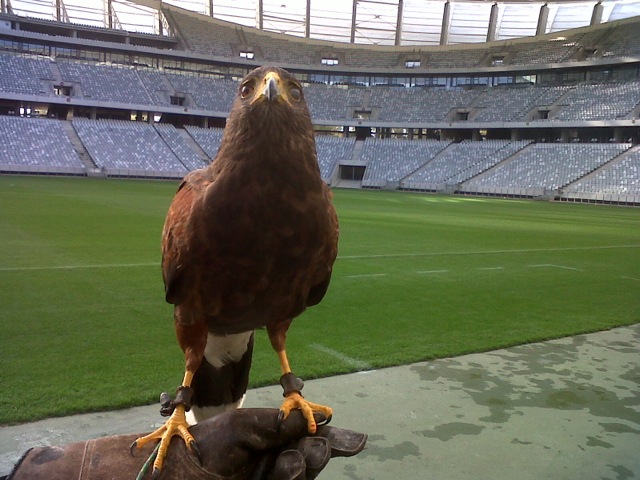
| City gets feathered aid to guard Stadium pitch The City has appointed a pigeon specialist called Scarlet, a Peregrine Falcon, to protect the pitch of the Cape Town Stadium in an environmentally friendly, non-lethal way. Read more below:
For the next six months, the pitch of the Cape Town Stadium will be defended by the fastest animal on the planet. This is the first time birds of prey have been used to manage the pitch of a sports stadium in the Western Cape. Sports stadia, including the Wimbledon Tennis Stadium in London and the Nelson Mandela Bay Stadium in Port Elizabeth have had great success with this method. Approximately 120 kg of perennial rye seed, an all-year grass cultivar, is planted monthly on the stadium pitch to repair the damage caused by sporting events and concerts. Pigeons cause the most destruction during the 10 days before the seeds start to germinate. They consume up to 70% of the planted seed. Consequently, the rye grass does not grow. The pigeon activity makes it difficult to keep the grass on the pitch dense – a requirement for top quality sporting events. Scarlet, a natural enemy of pigeons is expected to have a great impact on pitch management practices. Stadium management, in accordance with the principles of efficiency that the City adheres to, decided to investigate an environmentally and financially sustainable method to deal with the pigeons. Direct losses as a result of the pigeon activity amounts to about R80 000 per annum on loss of seed. In addition to this, the money wasted on labour, water, fertiliser and fungicides is substantial. The quality of the pitch when utilised by professional teams is an important factor and guides the strict maintenance and utilisation protocol. “The Cape Town Stadium’s pitch has received the highest compliments from local, national and international teams who have played here,” said the Director of the Cape Town Stadium, Lesley de Reuck. This is a non-lethal programme. The aim is not to kill but to deter and to change the behaviour of the target species – in this case the presence of the falcon causes pigeons to adopt a new pattern of behaviour – away from the stadium. Unlike other bird-deterrent devices, the target species never becomes habituated to the presence of a live bird of prey. A large portion of a wild Peregrine Falcons’ diet consists of pigeon meat. Pigeons are therefore particularly afraid of these falcons. The Cape Peninsula has the highest concentration of Peregrine Falcons in the world. How it works:
Scarlet will be flown weekly at the stadium over the next six months to reinforce the presence of the predator. Thereafter, the frequency of the visits will be reduced to the level required to manage the pitch. |
Discover more from Martin Myers
Subscribe to get the latest posts sent to your email.


Leave a comment